Leak Detection Devices That Support Water Conservation Goals
Water conservation usually gets framed as a fixture choice or a landscape decision. Low-flow toilets, efficient showerheads, irrigation timers, and drought-tolerant planting all have their place. But some of the most avoidable water waste comes from a much less visible source, small plumbing leaks that continue day and night until someone notices a stain, a warped cabinet, or an unusual utility bill. By then, the water loss is only part of the problem. Repairs often spread outward into drywall, flooring, insulation, trim, and sometimes electrical work.
That is where leak detection devices earn their keep. They support conservation not by changing how much water a fixture uses during normal operation, but by shortening the time between when a leak starts and when someone responds. From a practical plumbing standpoint, that time gap matters more than many homeowners realize. A leak that runs quietly for two weeks wastes far more water than a fixture that is slightly less efficient but gets used for a few minutes at a time.
The Environmental Protection Agency’s WaterSense program recognizes that leak-detection and flow-monitoring devices can help consumers reduce water waste. That is a useful starting point because it keeps the conversation grounded. These devices are not magic, and they do not replace sound plumbing work. What they do is make hidden problems visible sooner, which is often the difference between a manageable service call and a full-blown restoration project.
Why early detection matters more than most people think
In the field, leaks rarely announce themselves in a dramatic way. A broken supply line under a sink is obvious. Most losses are not. They may begin with a slow seep at a connection, a worn valve, an aging water heater fitting, or a fixture component that no longer seals cleanly. Water can travel along framing, pool under appliances, or disappear into wall cavities before anyone sees it.
That delay has a direct impact on conservation. Even without assigning a fixed number to every scenario, the logic is straightforward. A very small continuous leak can waste water around the clock. The amount used by one event may feel minor. The cumulative effect over days or months is not.
This is especially relevant in properties that sit vacant for part of the year, rentals between tenants, or commercial spaces that are unoccupied after business https://privatebin.net/?edcdc49b5c71d123#8eo7NMDiVp2FZt5fN75K371g2sq5zCbXh7ZzPLacL8Zv hours. In those settings, the leak itself may be ordinary, but the response time is not. A device that alerts someone promptly can prevent long stretches of unnoticed water loss.
There is also a behavioral benefit. Once people start seeing how water use changes in real time or over short intervals, they become better at recognizing what is normal for the building and what is not. That awareness tends to lead to quicker action, which is exactly what water conservation needs.
What these devices actually do
The phrase “leak detection device” gets used broadly, and that can create confusion. In practical terms, the category includes devices that detect the presence of water where it should not be, and devices that monitor water flow patterns that may suggest a leak. WaterSense refers to leak-detection and flow-monitoring devices together, which is helpful because they address the problem from different angles.

A sensor placed near a vulnerable area, such as a water heater, can alert someone when water is present on the floor. A flow-monitoring device, by contrast, may flag unusual water movement in the system. One approach is local and direct. The other is broader and pattern-based. In many buildings, both ideas can support conservation because each catches a different kind of problem.
That distinction matters when setting expectations. A point sensor cannot tell you much about total system behavior. A whole-system monitor may not identify the exact corner of the room where water first appeared. Good results come from matching the device to the risk.
In homes, the conversation often starts around familiar problem areas. Water heaters deserve special attention because WaterSense recommends regular inspection for leaks, loose connections, corrosion, and other issues. That is sound advice regardless of whether a detection device is present. A sensor near the base of a water heater can complement visual inspection. It does not replace the judgment of a trained plumber, but it can catch a problem that develops between scheduled checks.
The best conservation tool is the one that gets used correctly
A mistake I see often is treating leak detection as a gadget purchase rather than part of a maintenance plan. The device gets installed, everyone feels reassured, and then months later nobody remembers whether alerts are enabled, whether batteries were changed, or whether the property manager still receives notifications after a staffing change.
Water conservation only happens when the warning reaches the right person and triggers a response. A silent detector under a sink does not save water if no one opens the cabinet for three weeks. A monitoring device that sends alerts to an outdated email address has the same weakness.
The most successful setups are usually the simplest to manage. They fit the building, the occupancy pattern, and the owner’s habits. In a constantly occupied home, one kind of alert may be enough. In a commercial property, especially one with evening and weekend vacancy, it is worth thinking harder about who receives alerts and who has authority to act on them. A commercial plumber can help evaluate where the biggest exposure sits, not only from a repair standpoint but from an operations standpoint.
Where leak detection fits into a broader plumbing strategy
Leak detection works best when it is paired with regular inspection and competent plumbing service. That point may sound obvious, but it is easy to overlook when technology enters the discussion. If a corroded connection is already showing signs of failure, a sensor nearby is useful, but the real fix is still a repair. The same is true if a water heater has visible issues at its fittings or around the tank area. Devices support conservation by buying time and improving visibility. They do not cure mechanical wear.
For homeowners and property managers, the practical approach usually looks like this:
- Identify the areas where hidden leaks are most likely to cause ongoing waste.
- Use detection or monitoring where it improves response time.
- Inspect known risk points, especially water heaters, on a regular basis.
- Bring in a licensed plumber when the system needs diagnosis or repair.
- Treat alerts as service events, not as background noise.
That sequence keeps the focus where it belongs. Conservation is not achieved by owning a device. It is achieved by interrupting waste quickly and following through with proper repair.
Water heaters deserve special attention
If you ask plumbers where a lot of avoidable interior water damage begins, water heaters come up early in the conversation. That is one reason the WaterSense guidance specifically mentions regular inspection of water heaters for leaks, loose connections, corrosion, and other issues. Those are practical warning signs, and they are easy to understand.
A water heater often sits in a garage, utility closet, or mechanical area that does not get much daily attention. Small leaks can go unnoticed, especially if the floor slopes toward a drain or if the location is visually cluttered. In some properties, the heater is tucked into a space that owners rarely enter. The risk is not only the water loss itself, but the amount of time the leak may continue before someone sees it.
For conservation purposes, adding leak awareness around a water heater is one of the more sensible moves a property owner can make. That may mean a simple sensor in the area, or it may mean broader flow monitoring depending on the building and the owner’s needs. Either way, the device should be viewed as a companion to inspection, not a substitute for it.
If there is any sign of leakage, loose connections, or corrosion, it is time to contact a qualified professional. Many online searches begin with phrases like plumber near me, water heater repair, or emergency plumber, usually after water is already visible. It is better to act at the first warning than to wait for the kind of failure that forces an urgent call.
Homes and commercial buildings do not face the same risks
A family home and a commercial property can both benefit from leak detection, but the reasons are not always identical. In a house, the main goal may be preventing prolonged waste from a hidden leak while protecting finishes and personal property. In a commercial setting, water loss may be only one part of a larger operations problem. Downtime, tenant disruption, access issues, and after-hours response all raise the stakes.
A commercial plumber typically thinks about leak detection a little differently because the building itself functions differently. Occupancy patterns are less predictable, responsibility may be shared among managers, maintenance teams, and tenants, and plumbing systems may be spread over a much larger footprint. Detection still supports conservation, but it also supports continuity. A leak caught on a Friday night is very different from a leak discovered Monday morning after an empty weekend.
That is why device placement and alert routing matter so much in commercial work. It is not enough to know that water is present. Someone has to see the alert, understand its urgency, and be in a position to approve access and repair. The more complicated the property, the more important that chain becomes.
The Hawaii piece, licensing, and why it matters for trust
In Hawaii, plumbing work is regulated by the Department of Commerce and Consumer Affairs. Consumers can verify a plumber’s license status, expiration date, and disciplinary history through the state’s official license search tools. That is more than a paperwork detail. Leak detection can point to a problem, but diagnosis and repair still depend on skilled hands. If a device reveals an issue behind a wall, at a water heater connection, or in a section of drainage or supply piping, the quality of the next step matters.
The state also makes clear that electrical and plumbing contractors must employ licensed electricians and plumbers to perform the actual work in those trades. For consumers, that matters when a project touches both detection equipment and the plumbing system itself. A property owner may be tempted to piece together help from several sources, but when the work goes beyond a simple consumer setup and enters true plumbing scope, licensed trade work protects both the building and the owner.
There is another threshold worth remembering. Hawaii advises hiring a licensed contractor for projects over $1,500 in labor and materials, or for any project that requires a building, electrical, or plumbing permit. In Honolulu, plumbing and drainage work authorized by permit is inspected for compliance, and local permitting guidance states that electrical and plumbing work must be performed by contractors licensed by the State of Hawaii. For owners searching terms like plumber Honolulu or plumber Oahu, that licensing framework is not a formality. It is the baseline for safe, compliant work.
Even the continuing competency requirements tell a story. Licensed plumbers on active status currently must show proof of continuing competency in the 2021 Uniform Plumbing Code for the present licensing period. That kind of ongoing requirement matters because leak issues are often less about obvious breakage and more about code knowledge, installation quality, and the judgment to recognize a developing problem before it becomes a failure.
Leak detection is not only about supply lines
People often associate leaks with fresh water piping, but conservation-minded maintenance should not become too narrow. When plumbing systems are stressed or aging, the first clue may appear in places that prompt broader inspection. A call that starts as leak detection may eventually involve drain cleaning or sewer line repair because water movement through the property is interconnected in practical ways, even if the original concern was a suspected supply leak or an unexplained wet area.
That does not mean every alert points to a major system issue. Often it does not. But it is a reminder that competent evaluation matters. A seasoned plumber is not only looking for water on the floor. They are trying to understand why it is there, whether it is isolated or systemic, and whether adjacent components show wear, corrosion, loose connections, or signs of repeated moisture exposure.
This is where experience becomes more valuable than product marketing. Devices can surface a symptom. They cannot exercise judgment.
Choosing where detection makes sense
Not every property needs the same level of monitoring. A small occupied home with visible plumbing access may need a modest approach. A larger house with multiple water-using appliances and long vacancy periods may justify broader coverage. Commercial spaces often have still different priorities.
A sensible placement strategy usually begins with consequence, not novelty. Where would a hidden leak continue the longest before someone saw it? Where would a leak waste water while remaining out of sight? Where would a relatively small drip create expensive damage around finishes, equipment, or stored materials?
The answer often includes utility areas, cabinets, and any location where water equipment sits without regular visual attention. Water heaters should be high on that list because they combine age, heat, mechanical connections, and the possibility of gradual leaks that may not be immediately obvious.
The other consideration is human behavior. A detector in a room that nobody enters is only as useful as the alert system attached to it. Flow-monitoring devices may be more useful in properties where local sensors would go unnoticed for long stretches. Again, there is no universal formula. Conservation gains come from aligning the tool with the property.
What property owners should ask before moving forward
Technology tends to attract broad promises, but plumbing decisions benefit from plain questions. Before adding leak detection, owners should ask themselves who will receive alerts, who can physically access the property, and how quickly they can authorize repair. Those are not glamorous questions, but they determine whether the system will actually save water.
A few practical checks help keep the decision grounded:
- Is the main concern hidden water loss, property damage, or both?
- Are there long periods when nobody is on site?
- Are known risk areas, especially water heaters, being inspected regularly?
- If an alert comes in, who contacts the plumber and who grants access?
- Does the work involve plumbing scope that should be handled by a licensed contractor?
Those questions shift the focus from product features to outcomes. That is where conservation decisions should live.
The role of the plumber after the alert
When an alert points to a real problem, speed matters, but so does restraint. Not every wet area requires invasive demolition, and not every unusual flow pattern confirms a catastrophic leak. A good plumber starts by narrowing the issue carefully, confirming the source, and deciding what repair path is justified by the evidence.
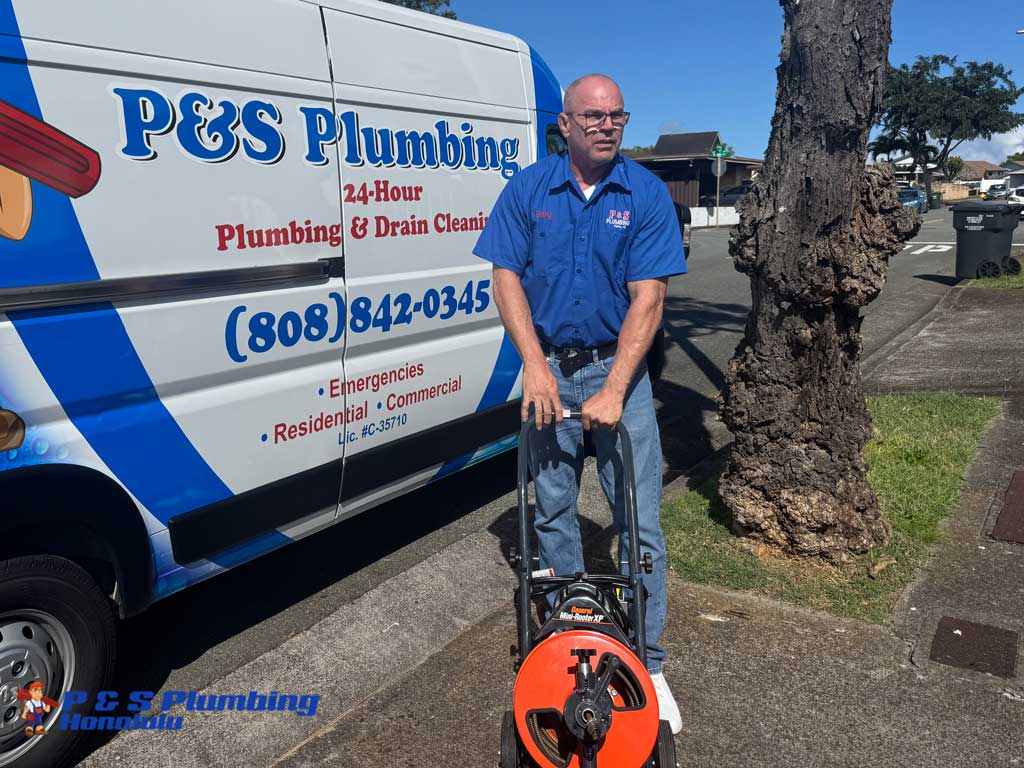
That diagnostic step is where local experience helps. A plumber Honolulu property owners trust, or a plumber Oahu residents call regularly, brings familiarity with local permitting expectations and the practical realities of working within Hawaii’s regulatory framework. If the repair crosses into permitted work, the licensing and inspection side cannot be treated as an afterthought.
For larger buildings, a commercial plumber may need to coordinate not only the repair but access windows, tenant communication, and any downstream work affected by the leak. In a smaller home, the path may be simpler, but the principle is the same. Detection buys time. Professional plumbing service turns that time into actual conservation by stopping the water loss correctly.
A quiet but meaningful step toward conservation
There is a reason leak detection deserves a place in serious water conservation planning. It deals with waste that is easy to miss, expensive to ignore, and often preventable if caught early. It also fits the way real buildings operate. People are busy. Utility rooms are overlooked. Vacant periods happen. Mechanical connections age. A practical conservation strategy accounts for those realities instead of assuming constant perfect supervision.
The strongest results come from combining a few straightforward habits: paying attention to water heaters, using leak-detection or flow-monitoring devices where they make sense, and calling a licensed plumber promptly when something looks off. In Hawaii, that means respecting the state’s licensing rules, verifying credentials when needed, and understanding that permitted plumbing work carries compliance obligations.
Leak detection is not flashy, and it does not need to be. Its value is simple. When water starts moving where it should not, the sooner you know, the less water gets wasted. Over time, that is one of the most practical conservation wins a property owner can achieve.